How Coconut and MCT Oils Work
Coconut Oil for Brain Health

Coconut oil and MCT oil contain fatty acids that are beneficial to brain health and could delay or slow down cognitive decline that may lead to Alzheimer’s disease.
Every cell in your body needs fuel to work properly, and your brain is no exception. Normally, the brain runs on glucose, but when parts of the brain can’t use glucose efficiently—as can happen with aging, diabetes, or prediabetes—those areas can become “energy-starved.”
This problem is even more pronounced in people living with neurological and neurodegenerative conditions such as Alzheimer’s disease, Parkinson’s disease, multiple sclerosis (MS), amyotrophic lateral sclerosis (ALS), epilepsy, and autism spectrum disorders, as well as certain psychiatric conditions where brain metabolism is affected.
That’s where ketones come in. Ketones are a natural alternative fuel for the brain, and medium-chain triglycerides (MCTs)—the special fats found in coconut oil—help your body make them quickly and easily.
You can picture a fatty acid as a string of pearls: each “pearl” is a carbon atom. MCTs have medium-length chains of 6 to 12 carbons, and this structure makes them easy to digest and rapidly converted to ketones in the liver.
How much? Coconut & MCT oils for brain health
Frequently Asked Questions About coconut & MCT oils for brain health
MCTs for brain health
Coconut oil is the richest natural source of MCTs, and it produces ketones no matter what else you eat with it. Within 15 to 30 minutes after consuming coconut oil, the shorter MCTs (C6 and C8) begin turning into ketones. Over the next few hours, the longer ones (C10 and C12) continue to generate more ketones.
Adding coconut oil to your morning coffee, smoothie, or meals throughout the day can help provide a steady source of ketones—a clean, efficient fuel that may support brain energy and function.
Coconut oil is also a great moisturizer for skin and hair. And the ancient practice of swishing the oil in the mouth for 10-20 minutes a few times per week–called oil pulling–can kill germs that cause dental decay and may also contribute to Alzheimer’s.
Pair Coconut & MCT Oil with a Keto Diet →
MCTs in breastmilk are vital to the growing newborn brain

MCTs in breastmilk provide ketones as fuel and as building blocks of brain lipids.
Most common cooking oils and fats–olive, soybean, canola, corn, peanut, and fish oils, margarine, shortening–contain no MCTs. But an important exception is human breastmilk, which contains MCTs, mainly lauric acid, which helps protect the newborn from infection.
Infant formulas worldwide usually contain coconut oil and/or palm kernel oil (the seed of the palm fruit) to provide the MCTs found in human breastmilk. And extra MCTs are added to formulas for premature newborns and babies who have trouble digesting regular formulas.
Interestingly, babies who breastfeed exclusively are naturally in “ketosis”. And ketones are the building blocks of the many important lipids in the growing brain.
The milk fat of other mammals–cows, goats, sheep, for example–also contain MCTs. So, you will get some MCTs in your diet if you eat whole milk, butter, cream, and full-fat soft and hard cheeses, yogurts, and sour cream. Nonfat milk and other dairy products contain no MCTs. And MCTs are reduced in low-fat milk and dairy products.
MCT Oil for Alzheimer’s

MCT oil is extracted from coconut oil or palm kernel oil.
MCT oil is important to brain health for all ages.
Interest in MCT oil for Alzheimer’s and cognition intensified around 2008 following the first hopeful clinical trials. And many more studies have followed. My husband Steve’s experience with coconut and MCT oil that year greatly helped increase awareness.
MCT oil has been used since the 1960s for people who don’t digest fat normally. And MCTs support nutrition for people of all ages–from the tiniest premature newborns to the elderly.
MCTs are not stored as fat. So, replacing some fat in the diet with MCT oil or coconut oil could help with weight loss. And bodybuilders use MCT oil to increase and preserve lean body mass.
In addition to converting to ketones, MCTs can provide fuel to the heart, muscles, and other organs. Even certain brain cells can use MCTs directly as fuel.
Important note: For people who are elderly or have a medical condition, consult with your physician before starting a ketone supplement or a ketogenic diet.
The brain-healthy fats in coconut oil
The MCTs and other substances in coconut oil also have important benefits for brain health beyond conversion to ketones:
- Lauric acid (C12) kills viruses, bacteria, fungus, and other microbes that many studies show may contribute to Alzheimer’s disease.
- Capric acid (C10) promotes multiplication of mitochondria where energy is produced from ketones and glucose. And C10 has anti-seizure activity.
- Coconut oil also contains polyphenols–substances that act as antioxidants and reduce inflammation.
- The MCTs themselves also help reduce inflammation.
- And substances in coconut oil slow down formation of Alzheimer’s plaques and promote repair of myelin which protects nerve fibers.
What Studies Show
MCTs and coconut oil improve cognition — the drugs don’t
None of the currently FDA-approved drugs for Alzheimer’s can claim that they improve memory or cognition. Based on their studies, they can only claim to temporarily slow down cognitive decline.
As of November 2025, at least 20 published studies of coconut and MCT oils in older adults and people with mild cognitive impairment and Alzheimer’s have reported positive improvements in memory, cognition, and functionality. And several studies have also reported improvements in physical strength and in quality of life.
Even cognitively normal healthy adults showed improvements in memory and cognition.
References for studies and reviews on coconut, MCT oil, and ketones

As of November 2025, at least 20 studies of MCT oil and coconut oil have reported cognitive benefits. Click here for a larger printable PDF.
Hundreds of anecdotal reports
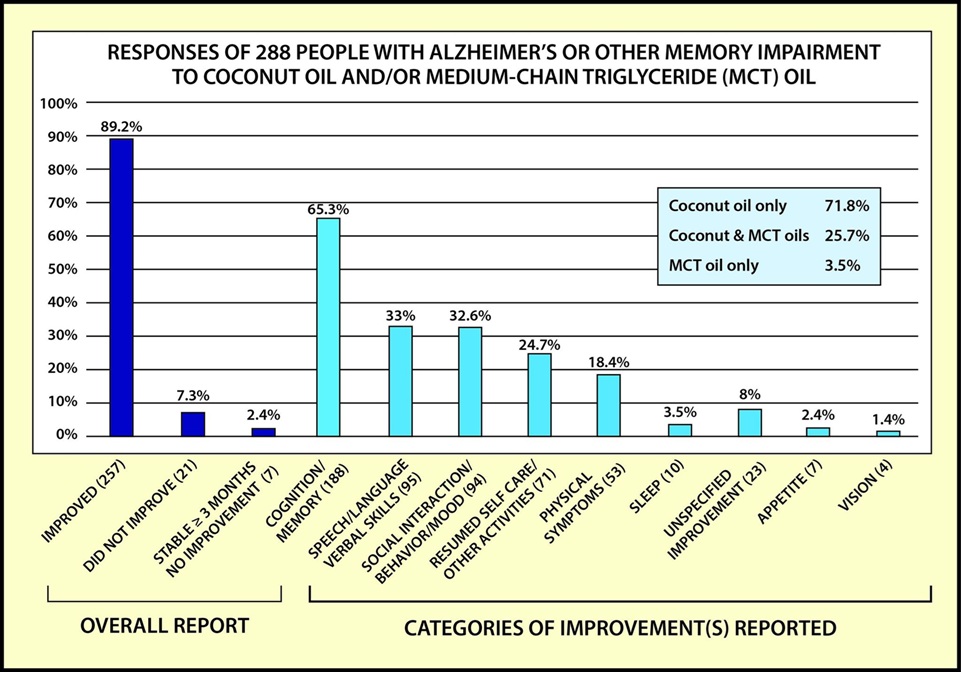
Improvements in 288 people taking coconut or MCT oil. Fig. 2 from Newport, Medical Research Archives, 2024.
I have received hundreds of emails from people or their caregivers about their responses to coconut and/or MCT oil. Between 2008 and 2014, I collected 288 reports about people with Alzheimer’s, other dementias, Parkinson’s, and other memory issues. Nearly 90% reported improvement overall. And many people had more than one type of improvement in memory & cognition, speech, social interaction, behavior, mood, physical symptoms, and some resumed self-care and engaging in hobbies. Importantly, such improvements are meaningful to the affected person and their loved ones. This study was presented on a poster at Alzheimer’s Disease International Conference in Amsterdam in 2023 (watch 3-minute video) and published in Medical Research Archives special Alzheimer’s issue in 2024.
Next Steps
Pair Coconut & MCT Oil with a Keto Diet →
Does coconut oil actually increase cholesterol levels?
Coconut oil does not contain cholesterol but does contain a sterol that naturally reduces cholesterol levels. No studies have ever shown that coconut oil causes heart attacks or other types of heart disease or strokes.
While coconut oil is relatively high in saturated fat, 70% of the saturated fats are the brain healthy MCTs. These saturated fats make coconut oil more stable for cooking and extend shelf life compared to the common vegetable cooking oils–soybean, canola, corn, peanut, and olive oils. The shelf life for coconut oil stored at room temperature is typically 18 to 24 months!
The mistaken belief that coconut oil is an “artery clogging fat” originated with the makers of margarines and shortenings in the mid-20th century. Coconut oil has a very long shelf life and was a competitor for the soybean and cotton oil industries. But their products, along with most vegetable salad and cooking oils, were loaded with trans-fats which turned out to be the real artery clogging fats.

By the mid 1950s, when heart attacks were increasing, more people were eating margarines and shortenings with trans-fats than butter and lard. Fig. 3 from Newport & Dayrit Nutrients 2024.
Around 2003, the FDA reported that 30,000 heart attacks annually appeared to be related to trans-fats in many foods. Trans-fats were gradually phased out of foods in the US and some other countries. And by 2018, partially hydrogenated oils were banned, and trans-fats were limited to no more than 0.5 grams per serving.
Throughout the 20th century, coconut oil was less than 1% of oils used for food preparation and therefore, could not have been responsible for the increase in heart attacks. In fact, by 1955 more people in the US were eating margarines and shortenings with trans-fats than butter and lard. So, if fat was to blame, the margarines and shortenings were more likely responsible than the animal fat and coconut oil that humans have thrived on for millennia.
The “lipid-heart hypothesis” and the epidemics of obesity, diabetes, and Alzheimer’s
In the 1950’s, Dr. Ancel Keys came up with the idea that eating too much fat, especially saturated fat, and cholesterol causes fat and cholesterol to be deposited in arteries. And that could lead to a heart attack.
Dr. Fabian “Toby” Dayrit and I spent two years reading through the dietary fat studies of the “lipid-heart hypothesis” and writing a review that was published in Nutrients in 2024. We learned that this idea was disproven in all the large dietary fat studies, and even in autopsy studies, conducted between the 1950s and the 1980s. Eating saturated fat did not increase atherosclerosis or plaques in arteries.
We also learned that reducing fat to 30% of calories compared to 40% had no effect on serum cholesterol. And replacing saturated fat with polyunsaturated fat (which usually contained trans-fats back then) reduced cholesterol levels but did not reduce the rates of heart attacks or deaths.
The National Diet Heart Study of 1963 actually recruited more than 30 companies to create “fabricated fat-modified” foods. And since then, thousands more low-fat ultra-processed and imitation foods have appeared on our grocery store shelves to the detriment of our health.
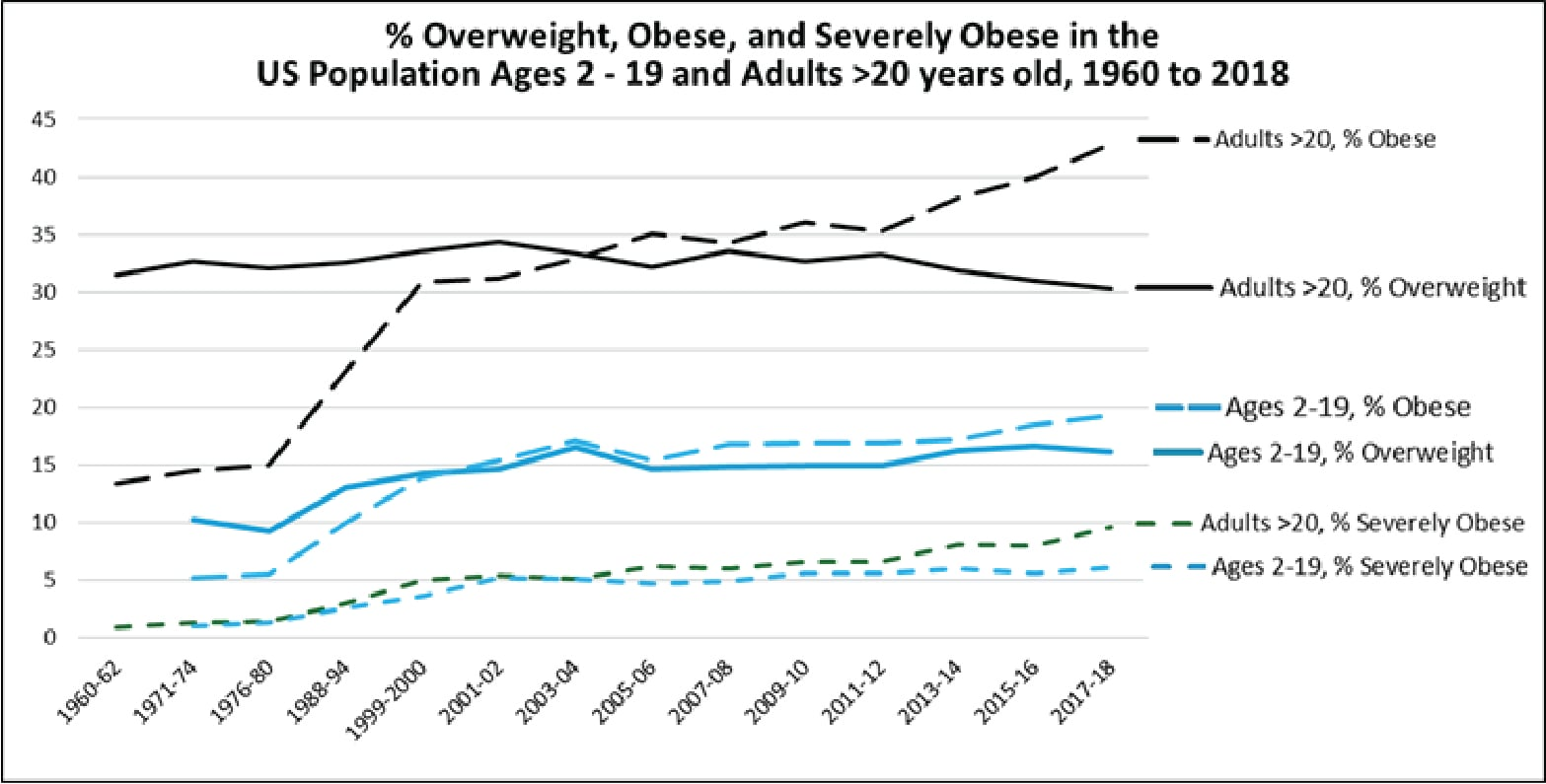
Rates of obesity in adults and children have steadily climbed since the US published the low-fat guidelines in 1980. Fig. 5 from Newport & Dayrit Nutrients 2024.
The “lipid-heart hypothesis” didn’t pan out, but the low-fat idea stuck
And, even worse, the disproven lipid-heart hypothesis has been the basis of the Dietary Guidelines for Americans since 1980.
Meanwhile, rates of obesity, diabetes, and Alzheimer’s have skyrocketed. Diabetes in people over 65 increased from 5% in 1980 to 29% by 2024 and even more have prediabetes.
This means that 78% of people over age 65 have diabetes or prediabetes. And people with diabetes have 6 times the risk (30%) of developing Alzheimer’s or other dementia compared to people who do not have diabetes (about 5%).
It makes sense then, to reduce sugar in the diet and to replace it with healthy fats, like coconut oil and olive oil. My book explains exactly how to eat this way—The Coconut Oil & Low Carb Solution for Alzheimer’s, Parkinson’s, & Other Diseases. And you will find plenty of delicious everyday recipes made with coconut oil and MCT oil for brain health.
Pair Coconut or MCT Oil with a Low-Carb or Keto Diet →
Saturated fat, coconut oil, and cholesterol
There is another common misbelief that coconut oil will increase the cholesterol level and that this will lead to heart disease. For part 2 of our two-year project, Dr. Dayrit and I analyzed 984 lipid results from 26 studies of people who used coconut oil between 1985 and 2024. Overall, coconut oil tended to raise ‘good’ HDL cholesterol and lower triglycerides, without increasing LDL (‘bad’) or total cholesterol—but individual responses varied widely.

If you want to try coconut oil but you or your doctor worry about coconut oil and serum cholesterol, consider checking your cholesterol and triglyceride levels beforehand and about 2 to 3 months later.
Still worried? Another alternative is to take MCT oil which does not contain the long-chain saturated fats.
Watch a 5-Minute Video Summary of our article on coconut oil & cholesterol
Here is a direct link to Newport & Dayrit Nutrients 2025 article.
How to Use These Oils
What to buy* & how to store
To get the most benefit of coconut oil for brain health, it is a good idea to avoid overly processed refined, bleached, and deodorized (RBD) oils. Many high-quality brands of coconut oil and MCT oil in the US come from just a few companies in Asia. Then, companies put their own label on the containers. Coconut and MCT oil products from Amazon, Costco, Sam’s Club and other store brands often are of the same high quality but can cost considerably less than some high-profile brands.
No refrigeration needed! Coconut and MCT oil can be stored at room temperature and have a very long shelf life–usually 18 to 24 months.
* Tiny commissions for Amazon and some other products help support this website and the email response to questions at ketones08@gmail.com.
Coconut oil for memory and brain health

Organic unrefined virgin coconut oil for the best quality. Look for oils that are “cold-pressed” or “expeller-pressed” since they are produced without chemicals and at relatively low heat. Organic virgin coconut oil processed this way keeps more of the important anti-inflammatory polyphenols.
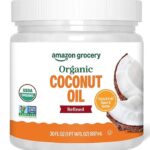
Don’t like the coconut oil aroma? Organic refined coconut oil is odorless and flavorless. But the oil still contains the same amount of MCTs in virgin coconut oil that convert to ketones to energize the brain.
MCT oil for memory and brain health
Important note: For people who are elderly or have a medical condition, consult with your physician before starting a ketone supplement or a ketogenic diet.
MCT oil is clear, tasteless, and odorless and mixes well into many foods and drinks–warm and cold. Look for organic MCT oil which means that it is extracted from coconut oil without using chemicals.
When you look for MCT oil, you will see products that contain various combinations of C8, C10, and C12.
-

Brain Octane- a popular C8 MCT oil
Pure C8 rapidly increases ketone levels and has higher peak levels than the mixtures. But the oil tends to be pricier. And diarrhea and upset stomach are fairly common. That’s why it is best to start with a small amount, such as 1/2 teaspoon, increase slowly, and to take the oil with food.
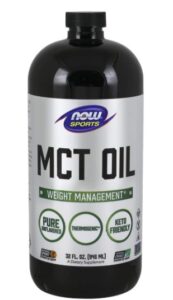
Now Sports C8/C10 MCT oil
- C8/C10 is the most common MCT oil available and tends to be less pricy than pure C8. And diarrhea and intestinal upset are less common. However, it is still wise to start with a small amount, increase gradually, and to take the oil with food.
-
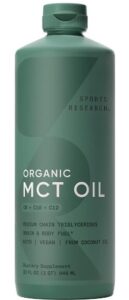
Sports Research C8/C10/C12 MCT Oil
C8/C10/C12 contains about 30% lauric acid (C12) which converts more slowly to ketones. So, ketone levels can be elevated longer. Also, C12 kills many microbes that may contribute to Alzheimer’s disease as well as germs that cause dental decay. Hint: Swishing with high-C12 MCT oil or coconut oil for 10 to 20 minutes a few times a week could save you some drilling at the dentist’s office!
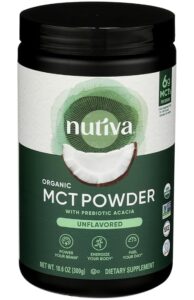
Nutiva Organic MCT Powder/Creamer
- Powdered MCT oil (usually C8/C10) may be tolerated better than the oil. And it is creamy when blended into coffee or tea with a wire whisk or a frother.
-
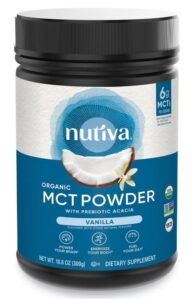
Nutiva Vanilla MCT Powder/Creamer
Vanilla Powdered MCT oil–even better if you like flavored coffee!
How Much to Start With
About 1 in 4 people have an upset stomach or diarrhea when taking coconut oil or MCT oil for the first time. So, it is important to start with a small amount, work up slowly, and eat the oils with other foods.
Step 1 – Start with ½ teaspoon 2 or 3 times daily with food to avoid upset stomach &/or diarrhea. If that happens, start with a smaller amount and increase slowly.
Step 2 – If tolerated, begin to increase by ½ teaspoon per serving every 3 or 4 days.
Step 3 – For prevention, aim for 2 or 3 tablespoons daily. For people with memory concerns, aim for 3 to 6 tablespoons per day or more if tolerated.
Step 4 – Optional: Mix MCT oil with coconut oil for higher ketone levels and longer duration (see below).
More Tips to Avoid Digestive Upset

Creamy coffee with coconut & MCT oil powders
Some people experience diarrhea even with small amounts of MCT oil but less often with coconut oil.
- Taking a mixture of MCT and coconut oil is often tolerated better than MCT oil alone (see below).
- Try adding the MCT oil or coconut oil to a food that you can eat or drink slowly over 20 minutes or more.
- Try using powdered coconut or MCT oil, which some people tolerate better than the liquid oils.
- Taking a pancreatic enzyme supplement at the same time as the oils could aid digestion.
- Adding cream or another fat to the meal along with MCT oil could naturally stimulate release of digestive enzymes from your pancreas.
Why and How to Mix Coconut and MCT Oils
Mixing MCT oil with coconut oil can give you higher ketone levels while keeping the benefits of the lauric acid, anti-inflammatory polyphenols, and other brain-healthy substances in coconut oil. Adding coconut oil to MCT oil can make ketone levels last longer in the blood to energize the brain.
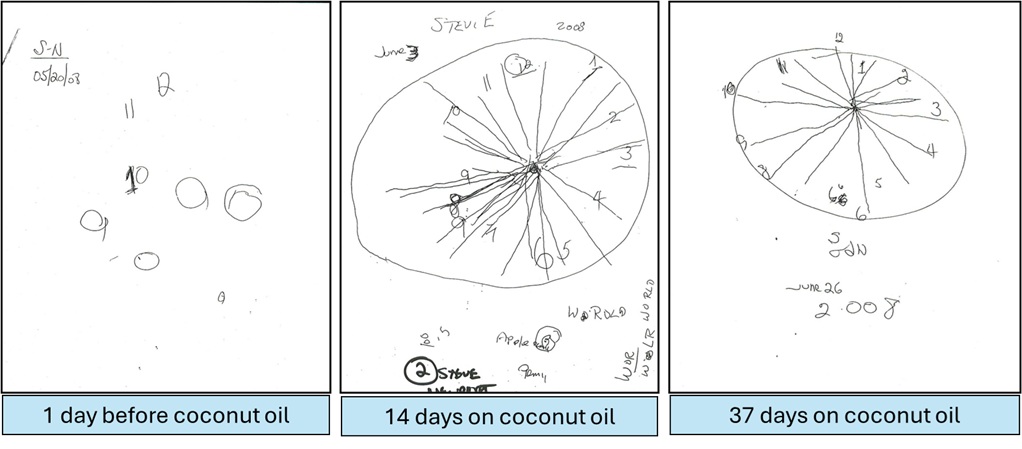
Steve’s Clock Drawings before & after starting coconut oil
My husband Steve Newport had a dramatic response to coconut oil. About six weeks later, I started giving him MCT oil and experimented with mixing the oils. I learned that combining slightly more MCT oil than coconut oil to the mixture stayed liquid at room temperature. And this mixture blends very well into many types of food and drink, warm or cold. See easy recipe below!
Easy recipe for mixing MCT oil and coconut oil
Yield: 7 ounces
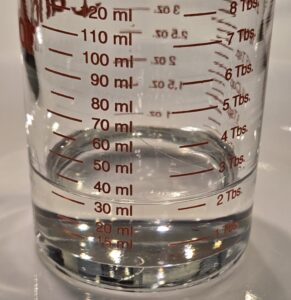
MCT & coconut oil mixture
- Place 3 ounces (90 gm) of coconut oil in an 8-ounce glass measuring cup.
- Place cup with oil into a pan of hot water to melt the oil; OR place cup with oil in the microwave for 10 seconds at a time until melted.
- Add 4 ounces (120 gm) of MCT oil to bring total oil up to 7 ounces.
- Store at room temperature, preferably in a glass container, such an MCT oil bottle.
For 28 ounces, mix 12 ounces (360 gm) of coconut oil and 16 ounces (480 gm) of MCT oil.
Note: MCT//143 is no longer available from Pruvit. Click here for a simple guide for what you can do in place of MCT//143.
Still have questions about MCT//143? Email ketones08@gmail.com.
How to Use Coconut & MCT Oil in Food
Of course, you can always take coconut or MCT oil with a spoon. But it is more pleasant for the long haul to take the oils with food. It is easier than you might think to adapt everyday meals by simply substituting coconut oil for other fats and oils in recipes. Or you can simply add coconut oil, MCT oil, or the mixture to prepared foods.
Pair Coconut or MCT Oil with a Low-Carb or Keto Diet →
Cooking with coconut oil
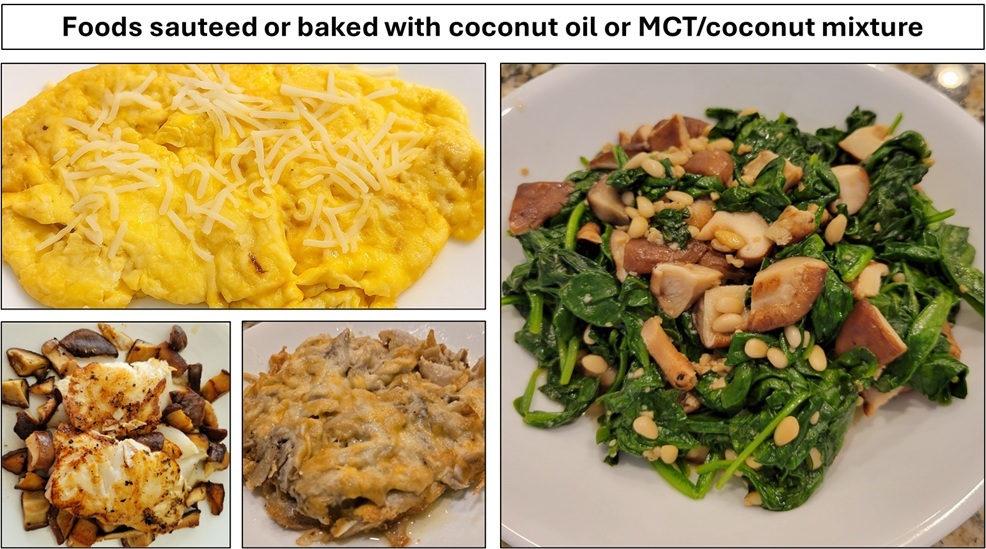
Cheesy scrambled eggs, Chilean sea bass, cheddar chicken casserole, spinach with mushrooms & pine nuts
Coconut oil tends to smoke above 350°F (175°C) which would ruin the oil.
For sautéing: Use low to medium-low heat to cook eggs, vegetables, stews, burgers–And anything else you would usually sauté.
For baking: Use coconut oil in place of other oils and fats for baking up to 350°F (175°C).
To cook at slightly higher temperatures: Combine coconut oil with butter or peanut oil.
Cooking with MCT oil
Not recommended for sautéing: MCT oil tends smoke at 320°F (160°C) and foams even at low heat on the stove.
For baking: Use MCT oil in recipes for baking only when oven temperature is below ~325°F (163°C).
Adding coconut or MCT oil to already prepared foods:
Coconut oil tends to “chunk” when added to cold foods but melts on contact in warm foods. MCT oil and the MCT/coconut oil mixture work well when added to cold or warm foods. Here are a few ideas:
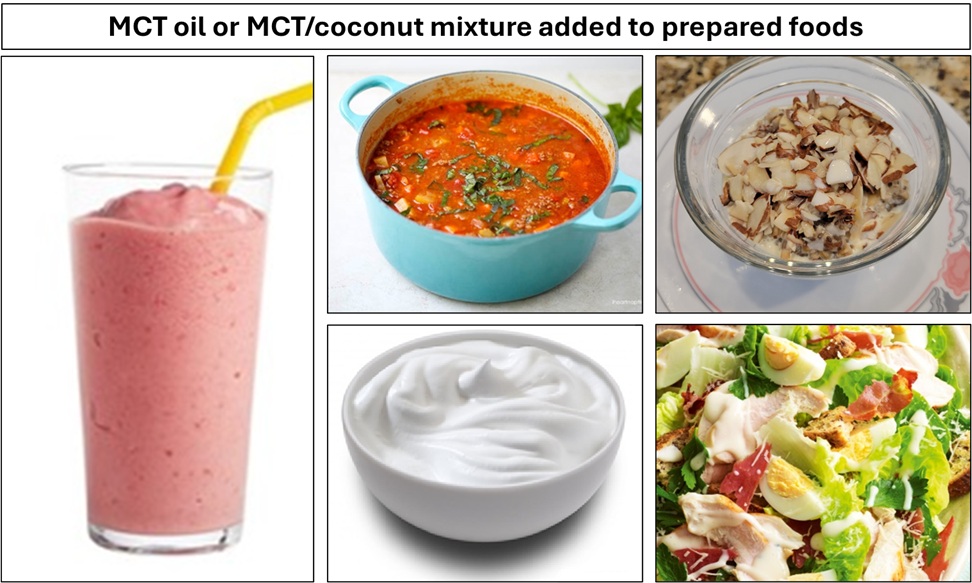
MCT oil or MCT/coconut oil mixture added to smoothies, soup, oatmeal, yogurt, and salad
- Use coconut oil, MCT oil, or the mixture instead of, or along with, butter:
- on vegetables, sweet potato, whole grain rice, or oatmeal.
- in your favorite broth, soup, stew, or chili.
- in coffee or tea (liquid oils float on the top but powdered coconut and/or MCT blend in for a creamy drink)
- Add the MCT oil or the MCT/coconut oil mixture:
- to smoothies, yogurt, cottage cheese, ricotta, milk, buttermilk, or kefir.
- drizzle on salad along with your favorite salad dressing.
- Add coconut milk (which is mostly coconut oil):
- to smoothies
- to ricotta
- to soups and stews
- or drink it diluted with water or coconut water!
Combining coconut and MCT oil with a low-carb diet
Eating a low-carb diet can build on the benefits of coconut oil and MCT oil for brain health. An easy way to reduce carbs is to cut portions in half of pasta, rice, cereals, breads, and starchy vegetables like potatoes and corn. And, when you are used to that, cut the portions in half again. You can replace the calories by adding more healthy fats to your diet. The more fat and fewer carbs you eat, the more you can expect your ketone level to increase. Go Full Keto → Cut carbs, add healthy fats
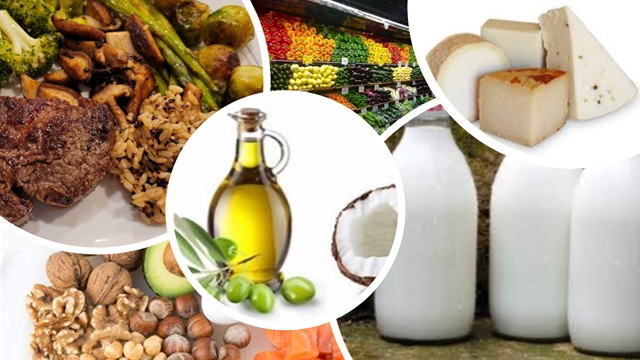
The whole foods our ancestors ate
An expert panel reported that lifestyle factors account for about 40% of dementia cases. So, Alzheimer’s and other dementias could be avoided by adopting a healthy lifestyle–And at the very top of the list is a healthy diet. This means getting away from too many ultra-processed foods and eating more whole foods like our great grandparents and the people who came before them.
Hundreds of studies have shown benefits to memory and general health by eating whole foods. And the best part is that these food groups are part of traditional diets that are available to nearly every culture worldwide–meats, fish, poultry, eggs, dairy, vegetables, fruits, nuts, seeds, whole grains and legumes.
Whole food diets are naturally lower in sugar. But eating smaller portions of bread, rice, pasta, cereals, and potatoes and more healthy fats–like coconut, MCT oil for brain health, olive oil, and butter–can help increase ketones and control blood glucose.
Important note: For people who are elderly or have a medical condition, consult with your physician before starting a ketone supplement or a ketogenic diet.
Click here for an easy low-carb diet that works well with coconut and MCT oil.
Books with recipes using coconut and MCT oils
To help you make the transition to a low-carb diet with coconut and MCT oil for brain health, you will find plenty of recipes for everyday meals in all of my books. These two books are especially helpful to meeting these goals:
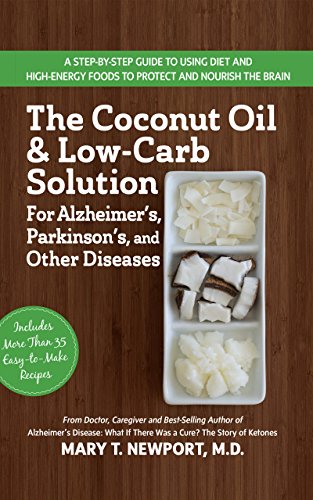
Combine coconut and MCT oil with a reasonable low-carb diet
The Coconut Oil & Low Carb Solution for Alzheimer’s, Parkinson’s, and Other Diseases (2015) – 320 pages – For the person who wants a book lighter on the science:
- A practical guide to eating a whole food low-carb diet with coconut and MCT oil.
- More than 35 easy-to-make recipes for everyday meals
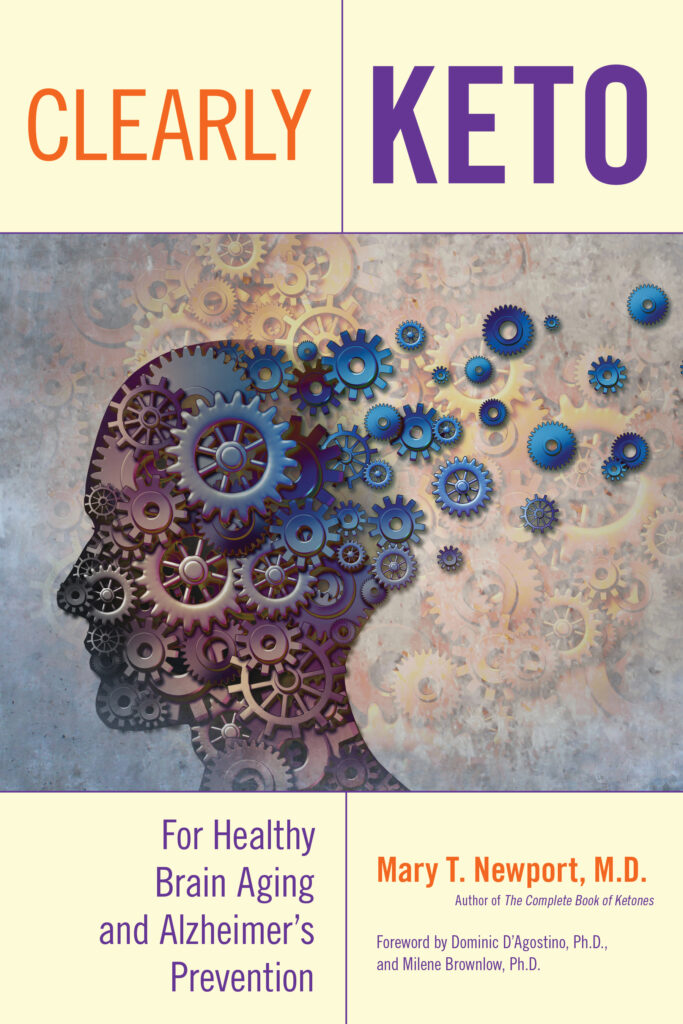
Diet, lifestyle, and aging – evidence & practical advice
Clearly Keto for Healthy Brain Aging and Alzheimer’s Prevention (2022) – 560 pages – For the person who wants the evidence and practical advice:
- Diet, exercise, and other lifestyle risk factors that can interfere with healthy aging.
- Eating a whole food diet with fewer carbs and more healthy fats–especially coconut and MCT oil–to slow cognitive decline
- What goes wrong in the Alzheimer’s brain–And how a ketogenic lifestyle could help.
- Dozens of easy everyday whole food recipes
Frequently Asked Questions
Here are a few more tips to make the most of coconut oil and MCT oil for brain health.
How should coconut and MCT oil be stored?
Coconut oil and MCT oil are extremely stable with a shelf life of at least 18-24 months when stored at room temperature. Coconut oil does not need to be refrigerated, hardens when cold, and is completely liquid above 80°F/ 27°C. MCT oil tends to thicken a bit in the fridge and becomes solid in the freezer.
Coconut oil may look cloudy when it is partly melted. But this does not indicate a problem with the oil.
Coconut oil and MCT oil can be stored in the type of plastic container the oils are sold in. Avoid putting coconut or MCT oil into Styrofoam containers because the Styrofoam will melt!
Coconut oil stores best in a container with a wide opening, since it tends to be semi-solid at room temperature. MCT oil and the MCT/coconut oil mixture store in and pour well from glass bottles.
Does coconut oil contain omega-3 or 6 fatty acids?
Coconut oil contains a small amount of omega-6 fatty acids but no omega-3 fatty acids. If coconut oil is your main oil, it is important to eat fish/seafood and/or take an omega-3 supplement such as fish oil, krill oil, or a DHA product. MCT oil does not contain any omega-3 or omega-6 fatty acids.
What about children?
The MCTs in coconut oil can also be beneficial to brain health in children by providing ketones to help build and fuel the brain. Intake of MCTs is minimal if a young child eats only non-fat or low-fat milk, yogurt, and cheese after weaning off breastmilk and formula.
Coconut oil is safe for infants and children. In fact, most commercial infant formulas contain coconut oil and sometimes MCT oil to provide the medium-chain fatty acids found in breast milk! Coconut oil and MCT oil are often used in ketogenic diets for children with autism and epilepsy and could be beneficial to brain health in children and adults with Down syndrome who have abnormal glucose uptake in the brain.
For children, a good starting point is ¼ teaspoon of coconut oil and/or MCT oil for each 10 pounds the child weighs 2 or 3 times a day with meals. Many children like the taste of coconut milk as well.
What about pets?
Dogs and cats can get dementia too. So, pets can benefit from coconut oil and MCT for brain health. And they also love the taste of coconut oil. Most cats and dogs will tolerate about ¼ teaspoon for each 10 pounds that the animal weighs once or twice per day.
Will adding coconut oil to my diet affect my weight?
If you feel you are too thin, simply adding coconut oil to your diet could help change that.
If you are overweight, substitute coconut oil for some other fats in your diet, or, better yet, reduce the portions of carbohydrates you are eating, such as bread, pasta, cereals, rice, and starchy vegetables. The beneficial effects of coconut and MCT oil can be further enhanced by eating a low-carbohydrate higher-fat diet. Also, MCT oil is partly converted to ketones, and the remainder is used within hours as fuel and not stored as fat. Some studies have found that replacing some other dietary fats with MCT oil or coconut oil could help reduce body fat.
Click here for a simple low-carb diet that works well with coconut and MCT oil.
What other coconut products contain coconut oil?
Coconut milk is mostly coconut oil and comes ready to drink or undiluted. A can of undiluted coconut milk or coconut crème can be diluted with 1-2 cans of water. Diluting with coconut water is even tastier and adds vitamins and minerals. Coconut milk must be refrigerated after opening and should be used within 4-5 days.
Grated or flaked coconut can be stored at room temperature but may last longer if stored in a refrigerator. Coconut yogurts, kefirs, ice creams, creamers, and other fermented coconut milk products are also available.
Fresh coconut pieces can be stored in the refrigerator for a few days or frozen for a few weeks.
Can coconut oil be used for skin and oral care?
Yes! Coconut oil is found in many skin and oral care products and can also be used as a treatment for dry hair. Simply rub coconut oil into the hair and scalp and leave in place for about 30 minutes or cover your hair with a shower cap overnight. Then, shampoo as usual.
Coconut oil is often use for massage in newborns and adults. Studies show that the coconut oil fats increase in the blood after massage. The oil is quickly absorbed into the skin and does not leave a greasy film. One daughter reported that her mother with Alzheimer’s, who could not tolerate eating coconut oil, showed improvements following massage with a tablespoon or so of coconut oil.
The lauric acid (C12) in coconut oil kills the germs that cause acne and dental decay. Poor dental hygiene is a risk factor for Alzheimer’s disease. So swishing coconut oil in your mouth for 10-20 minutes a few times a week could improve brain health. You can also brush your teeth with coconut oil. I have done this since 2008 and haven’t had a single new cavity or need other dental repairs.
Coconut oil becomes solid on contact in cold pipes. So, to avoid clogging the sink, run warm water, and spit the oil into a waste container or a small disposable cup.
Explore Other Options to Boost Ketone Levels
How Ketones Help Alzheimer’s & Memory (Overview)
Pair Coconut & MCT Oil with a Low-Carb or Keto Diet
Consider Ketone Esters for rapid therapeutic ketosis
Build on Coconut & MCT Oil with Ketone Salts
Return Home – Introduction to Website
Also on this website:
Videos/Podcasts
Articles by Dr. Newport
Ketone Research Articles
Ketone Supplements
Books & Keto Monitors
Supplies for Caregivers
Return to Home→
