What are ketone salts?
Ketone salts for brain energy are exogenous ketone supplements that provide beta-hydroxybutyrate (BHB), an alternative fuel that can be used by the brain when glucose metabolism is impaired.
Ketones are rapidly taken up by the brain and nearly all other tissues in the body to use as fuel. Anti-inflammatory effects of ketones could also be beneficial to brain health and general fitness. These effects could be helpful to people with mild cognitive impairment and Alzheimer’s disease.
Ketone salts are supplements that combine a ketone with a mineral, usually sodium, potassium, calcium, and/or magnesium, all of which the body needs. The supplement usually comes as a powder that is diluted with water. Some companies also have ready-to-drink “shots”, or a concentrated liquid that can be diluted.
Most ketone salts products contain minimal, if any, sugar and are sweetened with monk fruit, stevia, allulose and/or erythritol, a sugar alcohol.
By Dr. Mary Newport
Mary T. Newport, MD, is a physician, author, and researcher who has explored ketones and alternative brain fuels for Alzheimer’s disease and other neurological conditions since 2008. Her work combines scientific research with personal experience caring for her husband, Steve, who developed early-onset Alzheimer’s disease.
Ketone salts were the first ketone supplements on the market that contain the ketone betahydroxybutyrate (BHB). BHB is naturally made in the body from burning fat while fasting or when eating a low-carb high-fat diet.
Dr. Dominic D’Agostino at the University of South Florida developed and tested ketone salts which then became widely available in 2016 through network marketing by Pruvit Ventures. Many other brands with a variety of flavors are now available in stores and online.
Important note: For people who are elderly or have a medical condition, consult with your physician before starting a ketone supplement or a ketogenic diet.
Explore books by Dr. Mary Newport →
Why Ketone Salts?
Ketone salts provide beta-hydroxybutyrate (BHB) directly to the bloodstream, raising ketone levels without requiring fasting or a ketogenic diet. The increase typically begins relatively quickly and may last for several hours, depending on the dose, formulation, and individual metabolism.
Ketone salts can produce higher blood BHB concentrations than typical servings of coconut oil or MCT oil alone, although responses vary. They may be useful as part of a broader strategy to provide alternative fuel for the brain and other tissues. Research is continuing to determine the potential benefits of exogenous ketones for cognition, neurological conditions, and physical performance.
Combining Ketone Salts with Coconut Oil or MCT Oil
Ketone salts and medium-chain triglycerides (MCTs) raise blood ketone levels through different mechanisms. Ketone salts supply BHB directly, producing a relatively rapid increase in circulating ketones. MCTs are absorbed and transported to the liver, where they can be converted into ketones over a longer period.
Combining ketone salts with MCT oil may help maintain higher blood ketone levels for a longer period than ketone salts alone. Coconut oil also contains ketogenic medium-chain fatty acids and may contribute to this effect, although concentrated C8/C10 MCT oil generally produces a greater ketogenic response per gram.
Dr. Dominic D’Agostino and colleagues at the University of South Florida developed and patented formulations combining BHB mineral salts with MCTs. In a 2016 study, Kesl and colleagues investigated several ketogenic supplements in rats, including BHB mineral salts, MCT oil, and a 1:1 combination. Their findings demonstrated that exogenous ketone supplementation could produce sustained elevations of blood ketones without carbohydrate restriction.
The related U.S. Patent 10,646,462 also describes pharmacokinetic observations in a human subject comparing BHB salts, MCT oil, and their combination. These preliminary findings support further investigation, although larger human studies are needed to establish optimal doses, duration of ketone elevation, tolerability, and potential clinical benefits.
Scientific references:
Kesl et al., 2016, Nutrition & Metabolism |
D’Agostino et al., U.S. Patent 10,646,462
Sustain Ketosis with Coconut Oil & MCT Oil →
Pair Ketone Salts with a Low-Carb or Keto Diet →
What People Report When Taking Ketone Salts
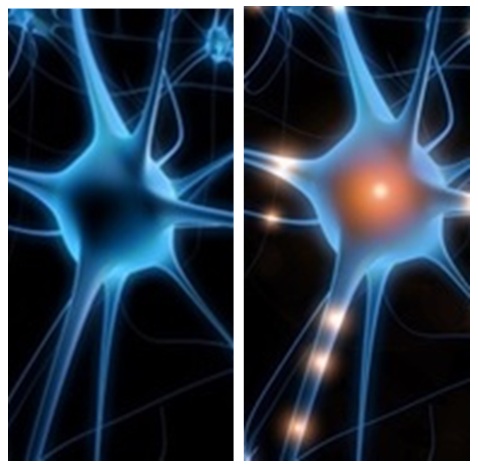
People taking ketone salts have reported improvements in mental clarity, focus, memory, and energy. Some also describe better sleep, reduced brain fog, and fewer aches and pains. These experiences are consistent with growing scientific interest in the role of ketones as an alternative energy source and their potential effects on inflammation, cellular metabolism, and brain function.
Ketone Salts, Weight Loss, and Muscle Preservation
Ketone salts are also attracting interest for weight management and preservation of lean body mass. Some people report reduced hunger and improved weight loss when using ketone supplements, particularly in combination with a low-carbohydrate diet.
Clinical research provides encouraging findings. In a 2021 study, Buga and colleagues investigated ketone salts during a six-week calorie-restricted ketogenic diet. Participants experienced significant reductions in body weight and fat mass, while those receiving ketone salts showed a trend toward reduced nitrogen loss, a possible indicator of muscle preservation.
A more recent randomized controlled trial, published in 2025, investigated BHB mineral salts during eight weeks of calorie restriction in 51 adults. Participants receiving BHB salts experienced a significant reduction in fat mass averaging 2 kg, improved body-fat percentage, and preservation of lean mass. Although differences between the supplement and placebo groups were not statistically significant, the findings support further investigation of ketone salts as a potential adjunct to weight management.
Ketones may also influence appetite regulation, energy metabolism, and muscle protein turnover. These effects are of particular interest for people seeking to reduce body fat while maintaining strength and muscle mass.
Research:
Buga et al., 2021 |
BHB salts and weight loss, 2025
Ketone Salts and Physical Fitness
Athletes and physically active individuals have also become interested in exogenous ketones for their potential effects on endurance, recovery, and exercise metabolism.
Ketones can provide an additional energy substrate for skeletal muscle and may influence how the body uses glucose and fatty acids during exercise. Research with exogenous ketone supplements has also investigated muscle protein synthesis, glycogen replenishment, and recovery after strenuous activity.
Findings vary with the type of ketone supplement, exercise intensity, and study design. Nevertheless, this remains an active area of research with potential applications for physical fitness, recovery, and maintaining muscle during aging.
The Research on Ketone Salts
Clinical interest in ketone salts has expanded rapidly. Research is investigating their effects on brain energy metabolism, cognitive function, cardiovascular health, physical performance, body composition, and several neurological and metabolic conditions.
Explore Clinical Trials Involving Ketone Salts →
Ketone Metabolism in the Heart and Kidneys

Read the study.
Dr. Stephen Cunnane and colleagues at the Université de Sherbrooke in Canada have investigated how exogenous ketones supply energy not only to the brain but also to other organs.
In a 2024 study, St-Pierre and colleagues demonstrated that oral BHB supplementation substantially increased circulating ketones and examined how the human heart and kidneys metabolize ketones using PET imaging.
These findings add to the evidence that ketones are an important alternative fuel for organs with high energy requirements.
BREAK-AD: Ketone Salts, Brain Energy, and White Matter Preservation
A particularly important study was published in 2026 by Maggie Roy, Mélanie Fortier, Stephen Cunnane, and colleagues at the Université de Sherbrooke.
The BREAK-AD randomized controlled trial investigated six months of supplementation with BHB mineral salts combined with nicotinamide riboside, a precursor of NAD+, in people with mild cognitive impairment.
Thirty participants completed the study, 15 receiving the active supplement and 15 receiving placebo.
The study reported several encouraging findings:
- 2.4-fold increase in gray matter ketone uptake.
- 3.1- to 3.6-fold increase in ketone uptake across seven major white matter tracts.
- Preservation of myelin density in the fornix, an important brain structure involved in memory, compared with declines in the placebo group.
- Better preservation of episodic memory and improved subjective cognitive complaints in the active group compared with placebo.
- Associations between improved processing speed, increased ketone uptake, and preservation of white matter myelin.
Of particular interest, the placebo group showed reductions of up to 10% in myelin density in certain regions of the fornix, while myelin density was maintained in the group receiving BHB salts and nicotinamide riboside.
These results suggest that improving brain ketone availability may help support not only neuronal energy metabolism but also the maintenance of myelin and white matter integrity, both essential for communication between brain regions.
The study was relatively small, and the combination formulation does not establish the separate contributions of BHB salts and nicotinamide riboside. Nevertheless, its findings provide an important foundation for further research into ketogenic therapies for mild cognitive impairment and Alzheimer’s disease.
Roy et al., 2026: Read the Published BREAK-AD Study →
Additional Research on Brain Health and Aging
Dr. Dominic D’Agostino and Dr. Csilla Ari at the University of South Florida have investigated the effects of exogenous ketones on neurological function, energy metabolism, and aging.
Their research and reviews describe multiple mechanisms through which ketones may support brain health, including effects on mitochondrial function, oxidative stress, inflammation, and cellular signaling.
These findings complement the growing clinical evidence that ketones may provide benefits beyond serving as an alternative source of energy.
Read Dr. Ari’s Review on Ketones and Brain Aging →
Safety
Beta-hydroxybutyrate (BHB) is a ketone naturally produced by the liver from fatty acids during fasting, carbohydrate restriction, and other conditions that increase fat metabolism. BHB provides an alternative source of energy for the brain, heart, muscles, and other organs.
The FDA has reviewed Generally Recognized as Safe (GRAS) notifications for certain BHB ingredients under specified conditions of use. However, as with most dietary supplements, this does not mean that every commercial ketone salt formulation, dose, or combination of ingredients has been independently evaluated or approved by the FDA.
Ketone salts typically combine BHB with sodium, potassium, calcium, and/or magnesium. These are essential minerals naturally present in the body and required for normal cellular, nerve, and muscle function. The amounts vary considerably among products and should be considered in relation to a person’s overall diet, medications, and medical conditions.
Ketone salts are generally well tolerated by healthy adults at commonly used amounts. Some people experience nausea, bloating, or diarrhea, particularly when first starting a supplement or taking larger servings.
Important note: Older adults and people with chronic medical conditions should consult their physician before starting ketone supplements or a ketogenic diet, particularly if they have kidney disease, heart failure, hypertension (high blood pressure), or diabetes, or take medications that affect fluid balance, electrolytes, or blood glucose.
Further reading: Studies and Reviews on Ketones, Coconut Oil, and MCT Oil
Explore Books by Dr. Mary Newport →
How Ketone Salts Compare with Ketone Esters
Ketone salts and ketone esters both increase blood ketone levels, but they differ in their chemical composition, the concentrations of BHB they can produce, and their effects on acid-base balance.
Ketone esters generally produce higher blood D-BHB concentrations than comparable amounts of BHB supplied as some ketone salt formulations. However, the response depends on the specific product, dose, and whether the supplement contains D-BHB alone or a mixture of D-BHB and L-BHB.
Ketone salts also supply minerals, usually sodium, potassium, calcium, and/or magnesium. The amount of these minerals limits how much of a particular ketone salt product can reasonably be consumed each day.
Ketone salts mixed with water generally have a milder taste than many ketone esters, which can have a distinctive bitter or acidic flavor. Some newer ketone esters, including Qitone, are available as relatively flavorless powders. Ketone salts are sold in a variety of flavors and formats, including instant coffee, tea, cocoa, and ready-to-drink beverages. Some products also contain MCT oil, protein, or vitamins.
Ketone esters generally cost more per gram of ketones supplied, although prices vary substantially among formulations.
Learn About Ketone Esters for Alzheimer’s and Brain Health →
How to Use Ketone Salts
For healthy adults interested in trying ketone salts, it is important to follow the manufacturer’s instructions and check both the amount of BHB and the mineral content per serving.
For older adults and people with chronic medical conditions, after consulting with their physician, I suggest starting with a small amount and increasing gradually as tolerated.
- Begin with approximately one-quarter of the manufacturer’s recommended serving, diluted in water.
- Increase gradually toward one-half to one full serving, once or twice daily if appropriate, taking into account the product’s mineral content.
- Consider dividing larger amounts into smaller servings to improve gastrointestinal tolerance.
- Maintain adequate hydration, taking individual medical needs and fluid restrictions into consideration.
- Discuss checking serum electrolytes, kidney function, blood glucose, and blood pressure with your physician, particularly if you take medications that affect these measurements.
Pregnancy and breastfeeding: I do not recommend supplemental ketone salts during pregnancy or breastfeeding because adequate safety studies are lacking. Pregnant and breastfeeding women naturally produce ketones, and the potential benefits and risks of additional ketone supplementation have not been sufficiently studied. Any medically indicated use should be supervised by a physician experienced in maternal and infant metabolic health.
Important Considerations

As with other nutritional supplements, people who are older or have medical conditions should consider how ketone salts may interact with their medications, mineral requirements, and fluid balance.
1. Sodium and Potassium Content
Nearly all ketone salts contain sodium, potassium, or other minerals. Some products provide several hundred milligrams of sodium per serving, while others contain more than 1,000 mg.
Excessive sodium intake may be undesirable for people with hypertension (high blood pressure), heart failure, fluid retention, or certain kidney conditions. Potassium-containing products require particular attention in people with impaired kidney function or those taking potassium supplements, ACE inhibitors (angiotensin-converting enzyme inhibitors), angiotensin II receptor blockers (ARBs), or potassium-sparing diuretics.
Check the label carefully and include the minerals from ketone supplements when evaluating your total daily intake.
2. Diuretics and Fluid Balance
If you take diuretics, have swollen ankles, or have a condition requiring sodium or fluid restriction, discuss ketone supplementation with your physician before starting.
Ketone salts and ketone esters differ in their mineral content. A ketone ester may avoid some of the mineral load associated with BHB salts, although it has its own dosing and safety considerations.
Maintain adequate hydration according to your medical needs. Drinking excessive water is not appropriate for everyone, particularly those with heart or kidney conditions.
3. Monitoring Electrolytes and Kidney Function
For older adults and people with chronic medical conditions, I recommend discussing baseline serum electrolytes and kidney function with your physician.
Depending on the product and your medical history, repeat testing after approximately three to six weeks may be useful, particularly when regularly consuming ketone salts containing substantial amounts of sodium, potassium, calcium, or magnesium.
4. Blood Pressure

Some people with high blood pressure are particularly sensitive to dietary sodium.
If you have hypertension, monitor your blood pressure regularly when beginning a ketone salt supplement. If your blood pressure rises persistently, discontinue the product and consult your physician.
5. Blood Glucose
Ketone supplements can temporarily lower blood glucose levels. In some studies, decreases of approximately 10–20 mg/dL have been observed, although the response varies with the individual, supplement, dose, and metabolic circumstances.
People taking insulin or medications that can cause hypoglycemia should discuss ketone supplementation with their physician and monitor glucose carefully when beginning a new product.
Is It Necessary to Measure Ketone Levels?
For most healthy people using moderate amounts of ketone salts, routine blood ketone measurements are probably unnecessary. However, monitoring can be useful for understanding how your body responds to a supplement, comparing different formulations, and determining how long blood ketone levels remain elevated.
Ketone salts commonly increase blood BHB concentrations by approximately 0.5–1.5 mmol/L, depending on the product, dose, and individual response.
Nutritional Ketosis and Ketoacidosis
Nutritional ketosis is a normal metabolic state in which the liver produces ketones to provide an alternative energy source, particularly during fasting or carbohydrate restriction. In healthy people, blood pH and bicarbonate levels ordinarily remain within normal limits.
This is different from ketoacidosis, in which ketone accumulation contributes to metabolic acidosis, characterized by reduced blood pH and bicarbonate concentrations.
Diabetic ketoacidosis usually occurs when insufficient insulin allows excessive ketone production, often accompanied by markedly elevated blood glucose. However, ketoacidosis can occasionally occur without pronounced hyperglycemia, particularly in people taking SGLT2 inhibitor medications.
Nondiabetic ketoacidosis can also occur, although it is uncommon. Potential circumstances include prolonged fasting or starvation, severe illness, pregnancy accompanied by inadequate food intake, and other conditions that substantially increase ketone production.
Can Exogenous Ketones Affect Blood pH?
Ketone esters and mineral ketone salts can have different effects on the body’s acid-base balance.
In a 2017 study, Stubbs and colleagues compared ketone ester and ketone salt drinks in healthy adults. The ketone ester dose was 282 mg/kg of body weight, equivalent to approximately 19 grams of ketone monoester for a person weighing 150 pounds.
Following the ketone ester drink, average blood pH decreased significantly from 7.41 to 7.31, while bicarbonate fell from 23.6 to 17.0 mmol/L. Both values were below commonly used adult reference ranges and had not returned to baseline two hours after ingestion.
In contrast, the ketone salt drink did not lower blood pH or bicarbonate. Instead, both measurements increased slightly, with some statistically significant changes.
Although the researchers described these acid-base changes as mild, the findings demonstrate that a single dose of ketone ester can produce measurable, temporary acidification in healthy adults. The reported measurements were averages, and individual responses may have varied.
These findings warrant consideration when using large doses of ketone esters, taking repeated doses close together, or combining exogenous ketones with prolonged fasting or a strict ketogenic diet, particularly during illness.
The study documented acidemia and reduced bicarbonate after ketone ester ingestion, but did not establish clinically significant ketoacidosis in the healthy volunteers studied.
Research:
Stubbs et al., 2017, On the Metabolism of Exogenous Ketones in Humans. Figure 3 illustrates the changes in blood pH, bicarbonate, and electrolytes.
My Approach to Monitoring Blood Ketones and Glucose
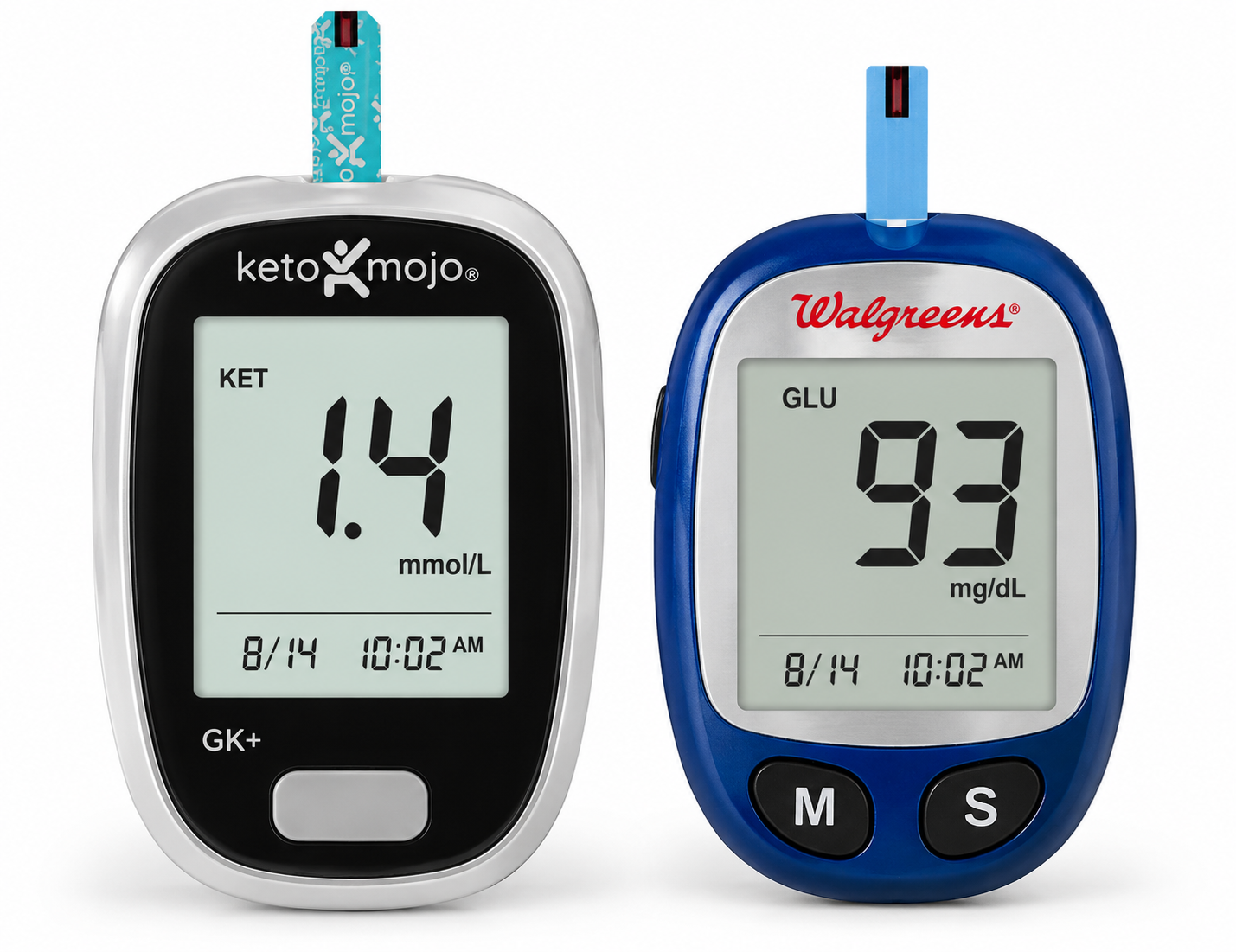
I like to monitor both my blood ketone and glucose levels when testing a new ketone supplement or comparing different products. These measurements help me understand how my body responds and how long ketone elevations are sustained.
The Keto-Mojo GK+ meter can measure both blood ketones and glucose using separate test strips. However, switching strips in the same meter and obtaining enough blood for a second reading before the finger prick stops bleeding can be difficult, especially when testing by yourself.
I find it more convenient to use two separate meters, one for ketones and one for glucose. I prepare both meters with their respective test strips before pricking my finger, then use the same finger prick to obtain both readings. This saves time and usually avoids the need for a second finger prick.
An inexpensive glucose meter can be used alongside a blood ketone meter.
Continuous Glucose Monitoring
Continuous glucose monitors (CGMs) offer another convenient way to follow glucose levels throughout the day and night without repeated finger pricks.
One option is the Abbott Lingo Continuous Glucose Monitor, an over-the-counter system that uses a small sensor worn on the upper arm for up to 14 days. The accompanying smartphone app displays glucose patterns and helps users understand how meals, exercise, and other daily activities affect their glucose levels.
Lingo is intended for adults aged 18 and older who are not using insulin. The device is not intended to diagnose diabetes or guide medication changes.
View the Abbott Lingo Continuous Glucose Monitor on Amazon →
Amazon Associate link. As an Amazon Associate, I may earn from qualifying purchases.
Continuous glucose monitors measure glucose, not ketones, so a separate blood ketone meter is still needed when measuring both.
 Where to find more information
Explore books by Dr. Mary Newport →
For more information, please read my articles “Ketone Salts Explained” and “Using Ketone Salts in the Elderly and People with Medical Conditions”.
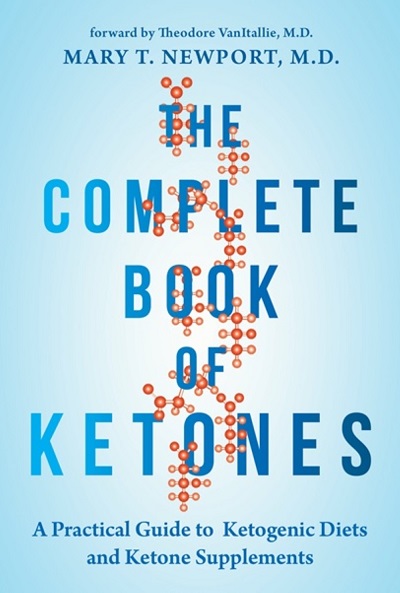
For even more information, check out my book The Complete Book of Ketones: A Practical Guide to Ketogenic Diets and Ketone Supplements. Ketones and ketone salts for Alzheimer’s and mild cognitive impairment are discussed in all of my books!
Where to find ketone salts
As an Amazon Associate, I earn from qualifying purchases. These commissions help support this website at no additional cost to you.
Pruvit Ventures was the first company to bring ketone supplements to the market in 2016. Pruvit’s strengths are their educational approach to training promoters and constant addition of new flavors.
Ketone salts are now available from many companies in stores and online. One of my favorites is KetoStart from Audacious Nutrition which has caffeinated and decaf ketone salts and smaller amounts of ketone salts in instant coffee, instant tea, and cocoa (my personal favorite).
In my opinion, the best products contain a balanced blend of sodium, potassium, calcium, and magnesium salts which could lessen the risk of electrolyte imbalance. Both Pruvit and KetoStart contain a balanced blend.
Important note: For people who are elderly or have a medical condition, consult with your physician before starting a ketone supplement or a ketogenic diet.

Pruvit KetoNat 20-Serving Variety Pack
Pruvit Ketone Salts
The Main Advantage: Constantly adding new flavors and bringing back seasonal favorites to reduce boredom. Most products are artificially sweetened, and some products contain MCT oil powder, protein, and/or vitamins.
The Taste: Comparable to other sports drinks. Some flavors are creamy or work well with added milk or cream. There are flavors for every taste preference.
The Cost: Higher cost per gram of ketones than many other products due to multi-level network marketing. The exact amount of ketones (BHB) is not listed on the package but is probably about 5-8 grams per serving or about to $0.77 to $1.39 per gram of ketones.
20-Serving Fan Favorite Variety Pack $139 (22% lower with monthly smartship)
Also, look for KetoKreme which is a flavored blend of coconut oil and MCT oils powders; KetoUp which is a carbonated beverage containing BHB; and Bone Broth ketone salts.
 KetoStart from Audacious Nutrition
*New versions coming soon – available for pre-order with 12 grams ketones per serving, 20 servings per box, more subtle flavoring, and more competitive pricing at about $0.23 per gram of ketones. New price will be $55 per box for 20 servings.
The Main Advantage: About double the amount of ketones per serving and lower cost per gram of ketones compared to other popular brands.
The Taste: Light tropical/citrus with and without caffeine
The Cost: Current version about $0.60 per gram of ketones; new version $0.23 per gram for pre-orders.
10-serving box $59.90

Left to right – KetoSpike Coffee, Tea, and Cocoa from Audacious Nutrition
Other ketone salt products from Audacious Nutrition include KetoSpike Instant Coffee, KetoSpike Instant Tea (lemon-flavored), and KetoSpike Cocoa, each with 3 grams of ketones per packet.
