Ketones for Brain Health and Memory
An overview of how coconut oil, MCT oil, and ketones may support brain energy and cognitive health during aging and Alzheimer’s disease.
By Mary T. Newport, MD, physician, author of four books on ketones and brain health, and advocate for research into metabolic approaches to Alzheimer’s disease.
Why study ketones and Alzheimer’s? Every cell needs fuel, and the brain normally relies mainly on glucose. In Alzheimer’s disease, some brain regions have difficulty using glucose efficiently. Ketones offer an alternative source of energy, which is why researchers are investigating ketogenic diets, MCT oil, and ketone supplements for brain health. Early studies suggest potential benefits for some people, and ongoing research is exploring how lasting those benefits may be and who is most likely to benefit.
Looking for an easy food-based approach? See Coconut Oil & MCT Oil for Brain Health
How Ketones Fuel the Brain
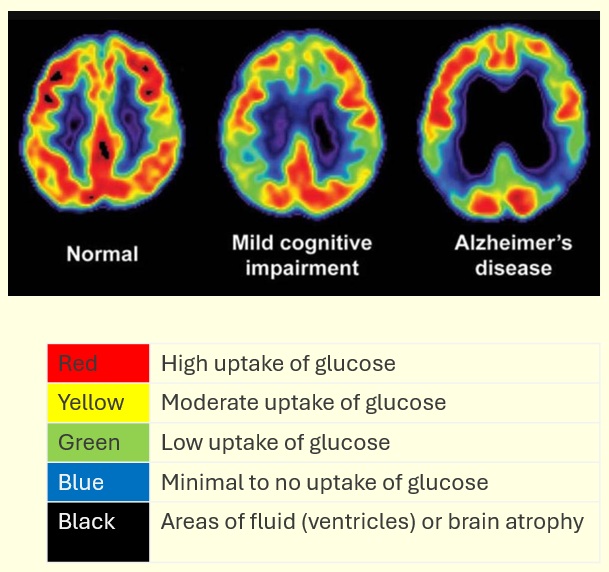
Image adapted from Medscape Education PP. R. Isaacson. Brain glucose hypometabolism, ketosis, and Alzheimer’s disease. July 26, 2014.
In Alzheimer’s disease, mild cognitive impairment (MCI), and Parkinson’s disease, certain areas of the brain have difficulty taking up and using glucose, their primary source of energy. This problem, known as brain glucose hypometabolism, may begin 10 to 20 years before symptoms appear. Insulin resistance can contribute to impaired glucose metabolism, along with other changes in how brain cells produce energy.
Altered brain glucose metabolism has also been observed in other neurological and psychiatric conditions, including epilepsy, autism spectrum disorder, schizophrenia, bipolar disorder, and major depression. Inflammation and impaired energy metabolism are increasingly recognized as important factors in many of these disorders.
The encouraging news is that the brain has another source of energy: ketones. Research using PET brain imaging has shown that, even when glucose uptake is reduced in people with MCI or Alzheimer’s disease, the brain’s ability to take up and use ketones remains largely intact. This means that increasing the availability of ketones may help provide energy to brain cells that are having difficulty obtaining enough energy from glucose.
There are several ways to increase ketone availability, including adopting a low-carbohydrate or ketogenic diet, consuming coconut oil or MCT oil, or taking ketone supplements such as ketone esters and ketone salts.
Coconut oil and MCT oil contain fatty acids that the liver can convert into ketones, even without following a strict ketogenic diet. These ketones can then circulate to the brain and provide an additional source of energy. The amount produced varies with the type and amount of oil consumed, the person’s diet, and individual metabolism.
Ketones may offer benefits beyond supplying energy. Research suggests that beta-hydroxybutyrate (BHB), one of the principal ketone bodies, also influences cellular signaling pathways involved in inflammation and protection against oxidative stress. Coconut oil contains additional compounds, including polyphenols, that have attracted research interest for their potential biological effects. These mechanisms offer further reasons to investigate ketogenic strategies for Alzheimer’s disease and other neurological disorders.
Watch: Our Story and the Science of Ketones

Steve and Mary Newport with Lori Johnson on The 700 Club in 2013.
About three and a half years after my husband Steve, who had early-onset Alzheimer’s disease, began experiencing remarkable improvements with coconut oil, health reporter Lori Johnson visited our home to interview us. Our five-minute story aired nationally on The 700 Club in early 2013, giving viewers a firsthand look at Steve’s experience and the hope that ketogenic therapies offered our family.

Dr. Mary Newport speaking about Alzheimer’s disease and ketones at TEDx USF in 2014.
In 2014, I was invited to give an 18-minute TEDx presentation at the University of South Florida, where I shared Steve’s story and explored the science behind ketones as an alternative fuel for the brain. The presentation has received more than two million views, reflecting widespread interest in ketogenic approaches to Alzheimer’s disease.
Ways to Increase Ketone Levels
There are several ways to increase ketone levels in the blood. Coconut oil and MCT oil provide fats that the liver can convert into ketones, while ketogenic diets and fasting encourage the body to produce more of its own ketones. Physical activity can also increase ketone production, particularly when carbohydrate availability is low. Caffeine may produce a small additional increase.
Ketone supplements offer another approach. Ketone salts generally produce a modest, relatively short-lived increase in blood ketone levels, while ketone esters can produce substantially higher levels, often more rapidly. The response depends on the product, serving size, diet, and individual metabolism.
These strategies can also be combined. For example, incorporating coconut oil or MCT oil into meals and using a ketone supplement may increase ketone availability over several hours. Combining these approaches offers exciting possibilities for increasing ketone availability throughout the day. Further research can help identify the most effective combinations, doses, and schedules for people with Alzheimer’s disease.
Some individuals and caregivers who have stayed in touch with me have reported meaningful improvements that were sustained for many years, in some cases for 10 years or longer. These long-lasting improvements are especially meaningful to the individuals and families who experience them. They also provide valuable insights that can help researchers design clinical trials to identify the people most likely to benefit.
Important note: Older adults and people with medical conditions, particularly those taking medications for diabetes, should consult their healthcare professional before beginning a ketogenic diet, fasting regimen, or ketone supplement.
A Growing Body of Ketone Research
Research into ketogenic strategies for Alzheimer’s disease, mild cognitive impairment, and other neurological disorders has expanded considerably. Clinical studies have investigated ketogenic diets, coconut oil, MCT oil, and ketone supplements, with some reporting improvements in memory, thinking, or other measures of cognitive function.
The Alzheimer’s Association has supported research on ketogenic interventions, and encouraging results from studies of ketogenic diets and MCT oil have been presented at Alzheimer’s Association International Conferences since 2017. Several of these studies were subsequently published in peer-reviewed journals, including research by Fortier, Roy, and their colleagues.
At the 2023 Alzheimer’s Association International Conference in Amsterdam, I presented two peer-reviewed posters. The first explored personalized nutritional ketosis using a whole-food, low-carbohydrate diet, MCT oils, and other ketogenic strategies for people with mild cognitive impairment and Alzheimer’s disease. The second presented my analysis of caregiver-reported responses from 288 people using coconut oil and MCT oil. You can view both posters and their video presentations on my AAIC 2023 Poster Presentations page. This research was subsequently expanded and published in the peer-reviewed medical journal Medical Research Archives in April 2024.
Published studies and reviews have examined MCT oil and coconut oil in people with Alzheimer’s disease, Parkinson’s disease, and related conditions. Many have reported encouraging improvements in measures of memory, thinking, or other aspects of functioning. Explore the clinical studies and results, including a downloadable table summarizing the research.
Ketone esters are also being investigated in a growing number of clinical studies involving brain health, metabolic disorders, and other medical conditions. Together, these findings provide a strong rationale for expanding clinical research to explore how ketogenic strategies can improve brain energy, support cognitive function, and potentially provide lasting benefits for people with Alzheimer’s disease and related conditions.
The Metabolic Coalition for Health, established with support from the Baszucki family, promotes research into ketogenic nutritional approaches for psychiatric disorders and other conditions associated with impaired metabolic health.
Reference List for Studies and Reviews (9 pages)
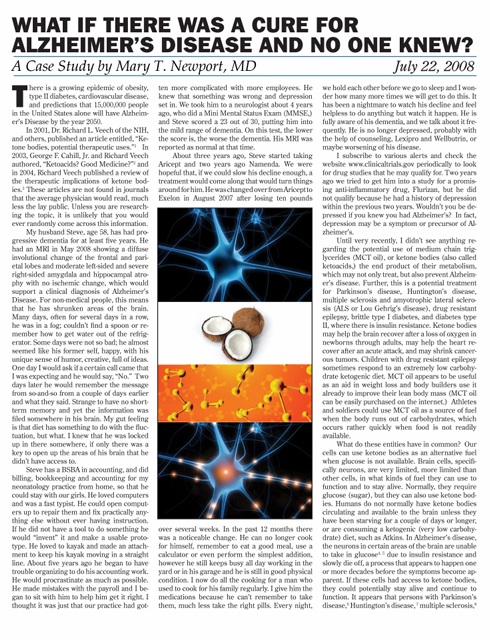
Case Report on Ketones for Alzheimer’s by Dr. Newport, 2008
Original 2008 article on coconut oil for Alzheimer’s:
About 2 months after my husband’s dramatic improvement with coconut oil in July 2008, I wrote this article to encourage immediate research of MCT and ketone esters for people with Alzheimer’s.
What If There Was a Cure for Alzheimer’s and No One Knew? (English)(Spanish)
Explore Your Next Steps
Explore My Books →
As an Amazon Associate, I earn from qualifying purchases.
These commissions help support this website at no additional cost to you.

Alzheimer’s Disease: What If There Was a Cure? The Story of Ketones, Third Edition
My most comprehensive book about Alzheimer’s disease, ketones, and the potential of alternative brain fuels. It tells the story of my husband Steve’s remarkable response to coconut oil and ketone therapies, explains the evolving scientific research, and offers practical guidance for incorporating ketogenic oils and a low-carbohydrate diet into everyday life.
